EU Data Residency
Persistent workspace data is stored in the European Union, with model routes governed by organization policy.
For EU public sector organizations
Built for public duties and GDPR obligations. Persistent workspace data stays in the European Union, with governed access, data minimization controls, and auditable activity.
Persistent workspace data is stored in the European Union, with model routes governed by organization policy.
Only the content required for an approved purpose is made available to the selected model and tools.
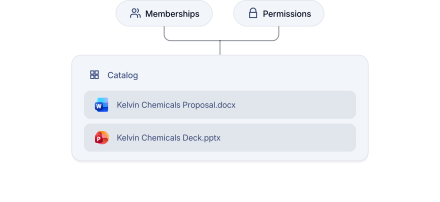
Identity, role, membership, and policy are evaluated before every request executes.
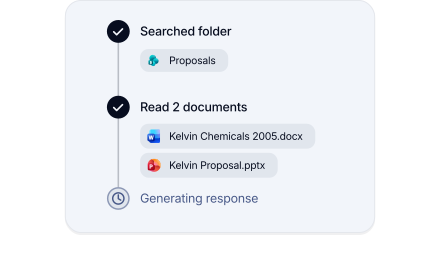
Requests, sources, approvals, access scope, and generated outputs are recorded for review.
One workspace
Approved purposes and permissions are checked before the model replies.
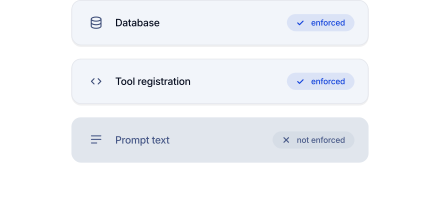
Protection is enforced in the database and tools, not left to prompts.
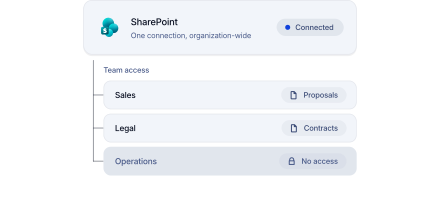
Access to one file does not grant broader department permissions.
Connections and model routes follow documented instructions and approved scopes.
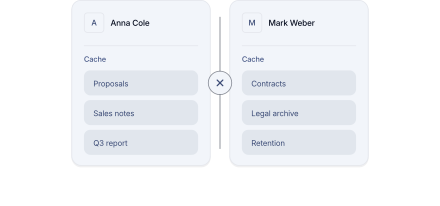
Cached data remains separated between users and authorized workspaces.
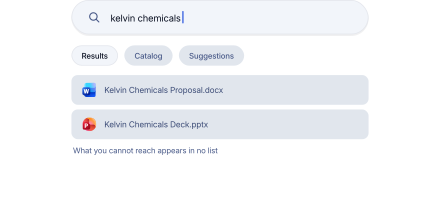
Unauthorized files never appear in search, catalog, or recommendations.
GDPR by design
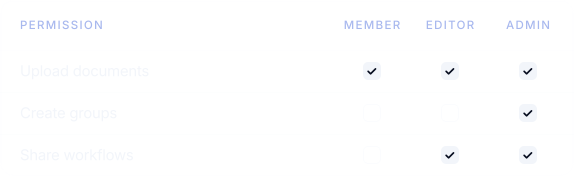
Roles, purposes, model routes, and retention rules are managed centrally and applied independently of model behavior.
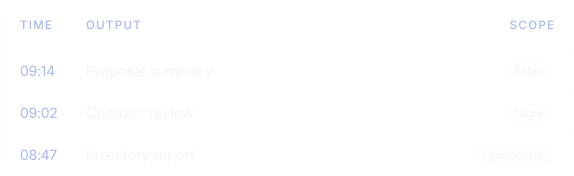
Every request is recorded with its access scope, source, approval state, route, and generated output.
Feza is designed to support GDPR-compliant processing. Compliance for a specific deployment also depends on the public body’s legal basis, instructions, data, contracts, and selected model routes.
Scope

Private by default, yet remains within the organization.
Private
Dedicated workspace. Sharing a department does not grant access to others.
By invitation
A department's data stays with that department and never leaks out.
Team-only
The ultimate boundary for models, permissions, files, tools, and budgets.
Ceiling
Technical specialists support architecture, access, and deployment decisions.
A shared channel for project, security, legal, and data-protection stakeholders.
Sessions for administrators, users, reviewers, and data-protection teams.
Map purposes, data classes, roles, model routes, retention, and human review.
Workshop topics
Persistent workspace data is stored in the European Union. Inference can run on an EU-hosted route or, where organization policy permits it, on an approved route beyond the European Union. Only the content required for the request is sent to the selected route.
No. Feza does not use customer content to train its own models. The data-use terms of external model providers are evaluated separately for each approved route.
Not unless access is explicitly granted. Identity, role, membership, and policy are evaluated before each request. Unauthorized content is not included in answers and does not appear in search, catalogs, or recommendations.
Yes. Requests, sources, approvals, access scope, model routes, and generated outputs are recorded so authorized teams can review how an outcome was produced.
No. Feza is designed to support GDPR-compliant processing through technical and organizational controls. The public body must still assess its legal basis, intended use, data, controller instructions, processors, contracts, retention rules, and selected model routes.